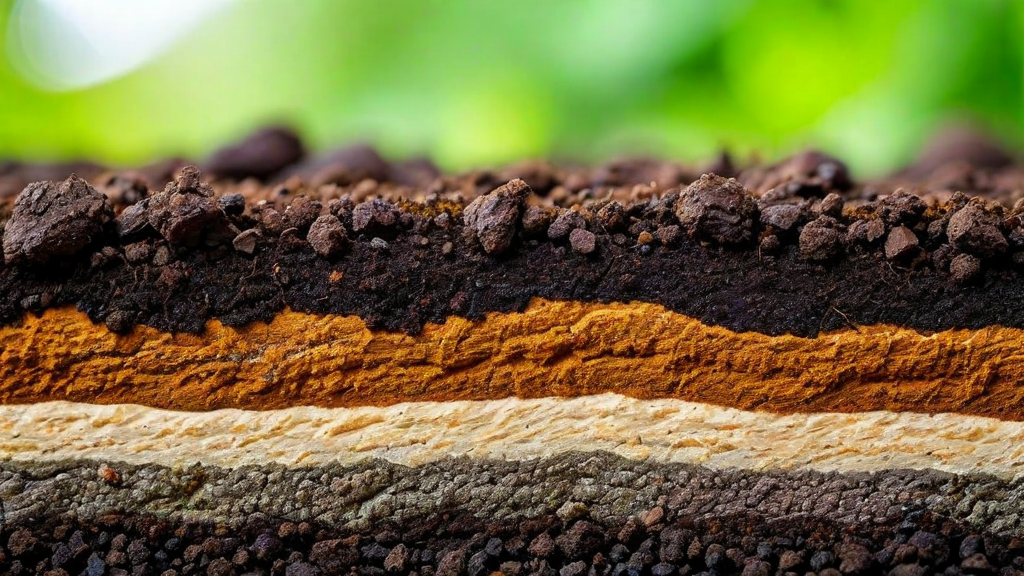
Beneath every successful farm lies a complex, living ecosystem that determines how well crops grow, how efficiently nutrients cycle, and how resilient the operation will be to drought, flood, and climate stress. Soil health — defined by its biological, chemical, and physical properties working in concert — is increasingly recognized not just as an agronomic concern but as a strategic asset. Farms that monitor, analyze, and actively manage their soil health consistently outperform those that treat soil as a static medium for holding plants upright.
The emergence of affordable soil analytics technology over the past five years has transformed what was once an expensive laboratory exercise into a continuous, field-based monitoring capability. Sensors measuring everything from soil organic carbon to microbial respiration rates can now be deployed at scale, giving farmers and agronomists a real-time window into soil dynamics that was previously unimaginable. The data these systems generate is reshaping how we think about fertilizer application, tillage, cover cropping, and long-term land stewardship.
What Soil Health Actually Measures
Soil health is not a single number. It is a composite of dozens of interacting properties that together determine how well a soil functions as a growing medium and as an ecosystem. Physical properties include texture (the ratio of sand, silt, and clay), structure (how particles aggregate), bulk density (compaction), water-holding capacity, and drainage characteristics. These properties change slowly and largely set the boundary conditions within which biological and chemical processes operate.
Chemical properties encompass nutrient levels (nitrogen, phosphorus, potassium, and the suite of micronutrients), pH, cation exchange capacity, electrical conductivity, and organic matter content. Of these, organic matter is arguably the most important integrative indicator of soil health — it influences nutrient availability, water retention, soil structure, and the habitat it provides for soil organisms. A single percentage point increase in soil organic matter can dramatically improve a field's drought tolerance and reduce the need for supplemental irrigation and synthetic fertilizers.
Biological properties are the least studied but arguably the most important for long-term soil function. The soil microbiome — the trillions of bacteria, fungi, nematodes, protozoa, and other organisms in a teaspoon of healthy soil — drives nutrient cycling, suppresses pathogens, supports plant immunity, and builds soil structure through the production of sticky compounds that bind mineral particles into aggregates. Modern DNA sequencing and enzymatic assay technologies are beginning to make routine assessment of soil biology practical, opening a new frontier in precision soil management.
The Sensor Revolution in Soil Monitoring
For most of agricultural history, soil testing meant sending samples to a laboratory and waiting days or weeks for results. The information was accurate but static, reflecting conditions at one point in time at one location. Managing a field based on a single composite soil sample taken from twenty random points is like managing a patient's health based on a blood test taken once a year — useful for broad trends but inadequate for responsive management decisions.
IoT soil sensors deployed in permanent grid patterns change this equation entirely. Modern capacitance-based moisture sensors, electrochemical nutrient probes, and temperature arrays provide continuous data streams that capture how soil conditions change through the growing season in response to weather, crop uptake, and management inputs. When connected to cloud-based analytics platforms, this data enables decision-making that was simply not possible before: irrigating only when the soil actually needs water, applying nitrogen when uptake rates indicate deficiency, and detecting compaction events in real time after heavy rainfall on vulnerable soils.
The spatial dimension of continuous soil monitoring is equally transformative. Precision agriculture researchers have documented extraordinary within-field variability in soil properties — a single 40-acre field may contain areas that differ by a factor of three in water-holding capacity, two in pH, and four in organic matter content. Managing this variability with uniform inputs has always been economically and environmentally inefficient. Dense sensor networks combined with GPS-referenced soil sampling and electromagnetic induction surveys now make it practical to create management zones that reflect actual within-field variability and apply inputs accordingly.
Soil Organic Carbon and the Climate Connection
Soil organic carbon has emerged as one of the most important metrics in modern agriculture for reasons that extend beyond crop production. Globally, soils store approximately three times as much carbon as the atmosphere — and agricultural soils, which have lost up to 60 percent of their original organic carbon through tillage and synthetic fertilizer use over the past century, represent the world's largest potential carbon sink. Practices that build soil organic carbon — cover cropping, reduced tillage, compost application, diverse crop rotations — simultaneously improve soil health and remove carbon dioxide from the atmosphere.
For farmers, the emerging voluntary carbon credit market creates a financial incentive to build soil organic carbon that augments the agronomic benefits. But verifying soil carbon changes at the scale needed for credible carbon accounting has been a major obstacle to market development. Direct soil sampling is labor-intensive and analytically expensive; statistical uncertainty in extrapolating from samples to field-level estimates is substantial. The emergence of proximal soil sensing technologies — particularly portable near-infrared spectroscopy devices and in-field electrochemical sensors that can estimate organic carbon rapidly and cheaply — is beginning to address this measurement challenge and make soil carbon markets accessible to mainstream farms.
Cover Crops and Soil Biology
The relationship between cover cropping and soil health is one of the most compelling stories in modern agronomy. Cover crops planted between cash crop seasons provide living root systems that feed soil microorganisms through root exudate secretion, protect the soil surface from erosion and crusting, fix nitrogen from the atmosphere (in the case of leguminous species), and add organic matter when terminated. The cumulative effect of even two to three seasons of cover cropping can measurably shift the soil microbiome toward more diverse, beneficial communities associated with better nutrient cycling and disease suppression.
Soil health analytics platforms increasingly incorporate biological monitoring alongside physical and chemical data. Soil protein index tests, which measure microbially-bound nitrogen as a proxy for biological activity, can be run in the field using smartphone-compatible colorimetric test strips. Respiration rate tests, which measure the rate at which soil organisms consume oxygen or produce carbon dioxide, provide a rapid indicator of overall biological activity. When these biological metrics are tracked alongside yield data over multiple seasons, the correlation between biological soil health and productivity becomes unmistakable — and provides farmers with a compelling economic justification for management changes that build soil life.
Digital Soil Mapping and Variable-Rate Management
The combination of high-resolution soil sensing, drone imagery, and machine learning has made digital soil mapping a practical tool for farm management rather than an academic research exercise. Digital soil maps that predict soil property distributions at sub-meter resolution — based on combinations of satellite imagery, topographic data, electrical conductivity surveys, and field-collected soil samples — are now available from commercial AgriTech providers at costs that are readily recoverable through input savings in a single growing season.
These maps feed directly into variable-rate application prescriptions that tell planters, fertilizer spreaders, and sprayers to adjust their output rate based on the predicted soil properties at each location in the field. A planter equipped with a variable-rate seeding system can increase seed population in the productive, high-organic-matter soils where yield potential is highest, and reduce it in sandy, drought-prone areas where yield potential is limited regardless of plant population. A fertilizer spreader following a variable-rate nitrogen prescription based on soil organic matter content and previous yield maps applies more nitrogen to responsive areas and less to saturated, low-productivity zones — reducing cost, improving agronomic efficiency, and cutting nitrogen losses to groundwater and air.
Building a Soil Health Monitoring Program
Starting a systematic soil health monitoring program does not require purchasing every available sensor technology at once. The most effective programs begin with baseline characterization — a combination of comprehensive soil sampling (at minimum, grid-sampled at 2.5-acre density) and an electromagnetic induction survey that maps the field's underlying texture and drainage variability. This baseline defines management zones and provides reference points against which future changes can be measured.
Continuous monitoring sensors are most valuable when deployed strategically in representative locations within each management zone — typically two to four locations per 40 acres of farmland is sufficient for most management decisions. Data from these sensors should be integrated into a farm management platform that displays trends alongside weather data, crop growth stage, and agronomic benchmarks. The goal is not to generate data for its own sake but to enable specific decisions: when to irrigate, whether a nitrogen application is warranted, whether the soil is fit for field traffic after rainfall.
Key Takeaways
- Soil health is a composite of biological, chemical, and physical properties — all three must be monitored to understand how a field is truly performing.
- IoT sensor networks enable continuous, real-time soil monitoring that reveals spatial and temporal variability invisible to conventional sampling.
- Soil organic carbon is both an agronomic asset and a climate metric — practices that build it benefit farms economically while sequestering atmospheric carbon.
- Cover cropping is one of the highest-return soil health investments available, with measurable impacts on soil biology, organic matter, and long-term productivity.
- Digital soil mapping and variable-rate management translate soil health data into actionable input prescriptions that reduce cost and improve sustainability.
- Effective monitoring programs start with baseline characterization and deploy sensors strategically within defined management zones.
Conclusion
Soil health analytics represents a convergence of agronomic science, sensor technology, and data management that has the potential to fundamentally transform how farming is practiced over the next decade. Farmers who invest in understanding and actively managing their soil health are not just improving their next season's yields — they are building the long-term productivity and resilience of their land in the face of a changing climate, tightening margins, and growing consumer and regulatory expectations for sustainable production. The tools to do this are available now, the economic case is compelling, and the farms that act on this data today will have a measurable competitive advantage in the years ahead.